
Updated June 2026 · Reviewed by Billy Forte
In Broward County, the divorce parenting class is the statewide DCF-approved Parent Education and Family Stabilization Course required throughout Florida, while certificate filing follows the Broward Clerk of Court’s instructions. The course is identical county to county; only the local filing logistics vary. This guide covers what’s statewide and how to confirm Broward’s specific filing steps.
Applies to the Florida Parent Education and Family Stabilization Course (Fla. Stat. 61.21). Requirements and acceptance can vary by court, county, judge, and case type, so review your court papers and official Florida sources.
Key Facts
- Statewide course: The DCF-approved, four-hour course applies in Broward just as across Florida.
- Local filing: Certificate filing follows the Broward Clerk of Court’s instructions and your case.
- Both parents: Each parent generally completes the course separately and files a certificate.
- Confirm steps: Check your court papers or the Broward Clerk for the current filing process.
- DCF approval matters: Confirm your provider is DCF-approved so the certificate counts.
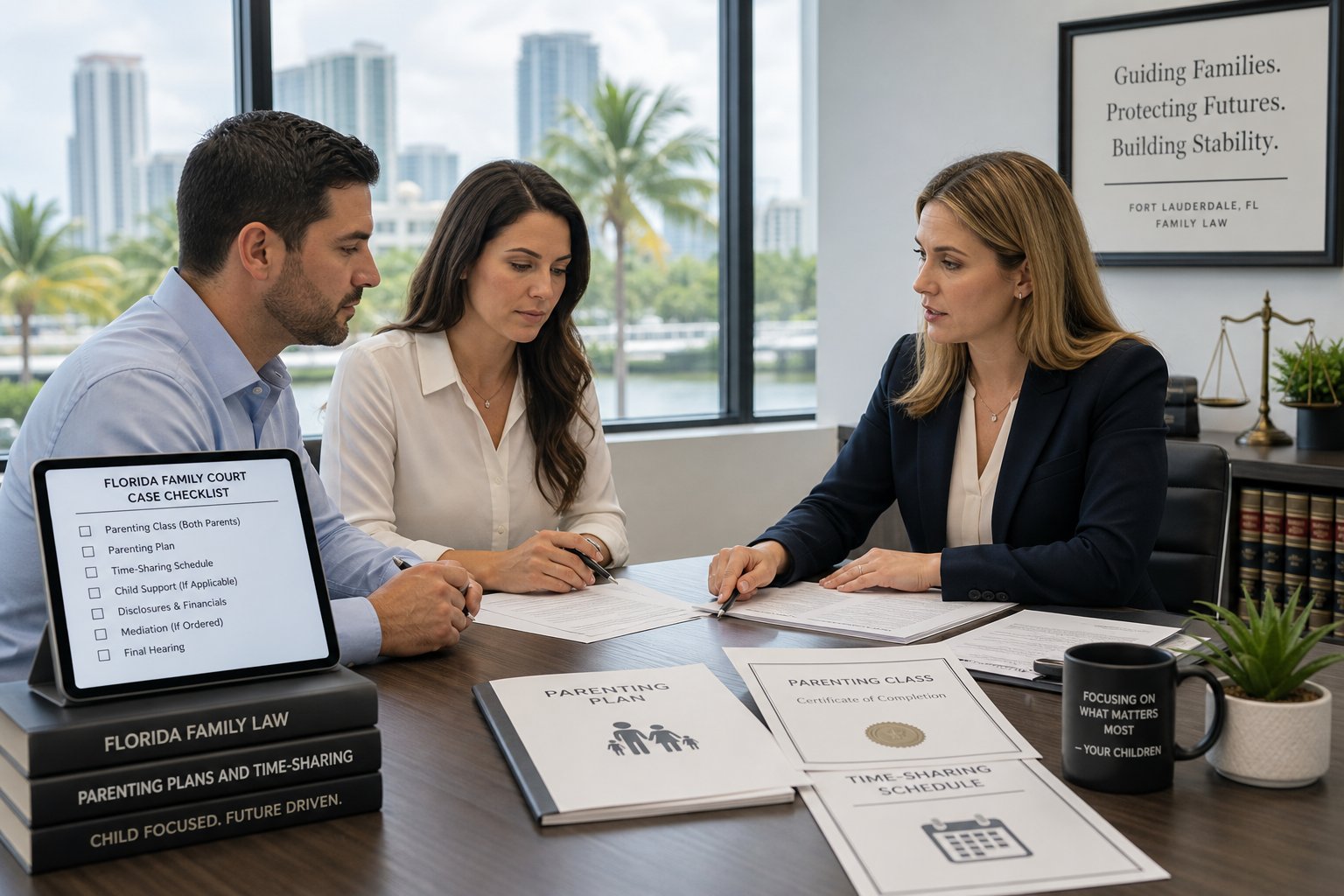
Who Needs A Parenting Class In Fort Lauderdale
In Fort Lauderdale, most court-related parenting classes mean Florida’s Parent Education and Family Stabilization Course. Under Florida Statute 61.21, this course is commonly required when parents with minor children are involved in a dissolution of marriage, and it also comes up in certain paternity and time-sharing cases.
That matters for Broward parents because the rule is not just about divorce. If your case deals with a parenting plan, parental responsibility, or where the child will spend time, the court may require the class. Judges may also order it in other family cases when conflict between parents affects children.
Common examples include:
- Divorce with minor children
- Paternity actions involving time-sharing
- Cases about parenting plans
- Disputes over parental responsibility
- Some modification cases when the court orders it
The safe takeaway is simple: if your family law case in Broward involves children, do not assume the class is optional. Check your court order, your case paperwork, and any local instructions from Florida Courts or the clerk. If you use a lawyer, ask whether each parent must complete the course and when the certificate should be filed.
What The Florida Parent Education And Family Stabilization Course Covers
The Florida Parent Education and Family Stabilization Course is not a general parenting seminar. It is a state-recognized course with set topics, and approved providers must meet standards from the Florida Department of Children and Families.
Florida law says the course must be at least 4 hours. Its purpose is to help parents understand how separation and family conflict affect children, and how to reduce harm during the case and after it.
A DCF-approved provider generally covers topics such as:
- The effects of divorce or separation on children
- Children’s developmental stages and emotional needs
- Better co-parenting communication
- Ways to lower conflict and keep children out of adult disputes
- Time-sharing and how a parenting plan works
- The meaning of parental responsibility
- Information about domestic violence and child abuse resources
For many parents, the most useful part is practical, not abstract. You learn how children may react by age, why hostile handoffs can hurt them, and how routine, calm messages, and clear boundaries can help. That makes the course relevant even if your case is mostly agreed, because courts want parents to focus on stability.
If you want to confirm the state standards yourself, review Florida Statute 61.21 and the Florida DCF information on approved providers.
How To Choose A Court-Accepted Parenting Class
The most important step is to make sure the course is from a DCF-approved provider. If the provider is not approved for Florida’s Parent Education and Family Stabilization Course, the certificate may not meet court requirements.
Start with the official source. Check the Florida Department of Children and Families approved course list or provider information before you pay. Then look at your Broward case papers and any instructions from your judge or division. Some providers may be approved by the state, but you still want a course format and certificate that match what your court expects.
When comparing options, look for these basics:
- Clear proof the course is DCF-approved
- A stated length of at least 4 hours
- A certificate of completion after you finish
- Simple access by phone, tablet, or computer if online
- Support if you have trouble logging in or downloading your certificate
If you want an online option, DivorceParentingClass.net offers a Florida Parent Education and Family Stabilization Course built for this requirement. It is designed for Florida family law cases and can be completed on your own schedule.
Before you enroll, verify your case details and keep a copy of your receipt and certificate. That small step can prevent stress later.
Online Vs. In-Person Parenting Classes In Fort Lauderdale
Both online and in-person parenting classes may work, but court acceptance depends on approval status and local instructions. For most parents, the real question is not which format sounds better. It is whether the class is the right Florida DCF parenting course for the case.
Online classes are often the easiest fit. You can log in from home, work in short sessions, and avoid travel across Broward traffic. That helps if you have job hours, child care limits, or another parent who lives elsewhere. Many online courses also let you use a phone, tablet, or computer.
In-person classes may appeal to parents who learn better in a classroom. But a local parenting program is not automatically the same as the court-required Florida course. Community classes can be helpful, yet you must confirm they are approved for Parent Education and Family Stabilization Course credit.
A simple comparison:
- Online: flexible, self-paced, easy access, often faster to start
- In-person: set schedule, travel required, may suit some learning styles
- Both: must meet Florida requirements if you need a court-use certificate
If your goal is compliance with less hassle, many parents choose online. Just confirm approval first, then keep your completion records organized.
What To Expect From Enrollment To Certificate Completion
The process is usually straightforward. You enroll, complete the required instruction, and receive a certificate of completion when you finish.
For an online course, you usually create an account, enter your basic information, and pay the course fee. Then you move through the lessons at the provider’s pace rules. Florida’s required course is at least 4 hours, so expect real seat time, not a quick download.
Course materials may include:
- Short lessons or reading sections
- Videos or slides
- Knowledge checks or quizzes
- Final steps to confirm completion
After you finish, the provider issues your certificate. Some providers make it available right away online, while others may offer email or download access. Read the provider’s directions carefully so your name and case details appear correctly.
Keep copies of:
- Your registration confirmation
- Payment receipt
- Certificate of completion
- Any email from the provider about filing or records
Common Family Law Situations That Trigger This Requirement
The course most often appears in cases involving children and decision-making. In Florida, that usually means cases tied to divorce, paternity, time-sharing, or a parenting plan.
Common situations include:
- Dissolution of marriage with minor children
- Paternity cases that address time-sharing
- Cases involving parental responsibility
- Disputes over parenting schedules
- Some modification matters when ordered by the court
Because requirements can vary by judge, county, court, and case type, read every order in your case. If the paperwork says both parents must complete the course, do not wait until the last minute.
How To File Your Certificate With The Court
You must follow the filing instructions in your case. In some cases, a lawyer files the certificate for you through the Florida Courts E-Filing Portal. In other cases, a parent may need to submit it to the Clerk of Court in the family case.
Do not guess about the filing method. Check your judge’s order, your notices, and the Broward County Clerk of Courts family division information. If anything is unclear, ask your lawyer or contact the clerk for procedural information.
If you still need the course, you can start the Florida program at DivorceParentingClass.net and save your certificate once you complete it.
FAQ
Is the Broward County parenting class different from other counties?
No. It’s the same statewide DCF-approved Parent Education and Family Stabilization Course. What’s specific to Broward is how you file the certificate with the local Clerk of Court.
How do I file my certificate in Broward County?
Generally with the Broward Clerk of Court, or through your attorney, following the county’s process. Confirm the current steps on the clerk’s official site or your court papers.
Can I take the course online in Broward?
Usually yes, if the provider is DCF-approved and your court accepts the online format. Confirm acceptance with your court, since local practice can vary.
Do both parents in Fort Lauderdale need to take it?
Generally yes, in cases with minor children. Each parent completes the course separately and files an individual certificate of completion.
Conclusion
Broward parents face the same statewide course requirement, with filing handled through the local Clerk of Court. Complete a DCF-approved course, confirm Broward’s filing steps from the clerk or your court papers, and submit your certificate. The course is the constant; the filing is what you verify locally.
You can complete the DCF-approved Parent Education and Family Stabilization Course online and file your certificate with the Broward clerk.
Related Articles
- Florida Parenting Class by County: Court Certificate Guide
- Miami-Dade Divorce Parenting Class Guide
- Palm Beach County Parenting Class Guide
- Hillsborough County Parenting Class for Divorce
Sources
Billy Forte is the founder of Divorce Parenting Class, which offers a Florida DCF-approved online Parent Education and Family Stabilization Course. The brand focuses on clear, supportive, plain-English guidance to help Florida parents complete the court-required class and file their certificate.
This article is general information, not legal advice. Florida family-law requirements and certificate acceptance can vary by court, county, judge, and case type, so review your court papers and official Florida sources, or consult a family-law attorney, before acting.